Converting physical documents into digital PDF files is crucial for efficiency, organization, and security in today’s digital world. The Portable Document Format (PDF) is universally recognized for preserving formatting, ensuring compatibility, and offering robust security features, making it the preferred choice for digital archiving and sharing. This guide details various scanning methods, explains different scanner types, and provides expert tips for quick and easy PDF conversion.
Document Scanners: A Comprehensive Guide
Converting paper documents into digital PDF files can be accomplished using a variety of devices and software, each suited to different needs and volumes. Understanding the tools available is the first step toward building an efficient scanning process. From dedicated hardware to versatile mobile applications, the right solution depends on your specific requirements, such as document type, scanning volume, desired quality, and budget.
Common Types of Document Scanners
Document scanners come in various forms, each offering unique advantages for different scanning scenarios. Choosing the correct type ensures optimal speed, quality, and convenience for your tasks.
-
Flatbed Scanners: These scanners feature a flat glass surface for document placement, ideal for fragile items, bound materials like books, or irregular-sized objects. They offer high resolution for detailed scans, making them versatile for various media types.
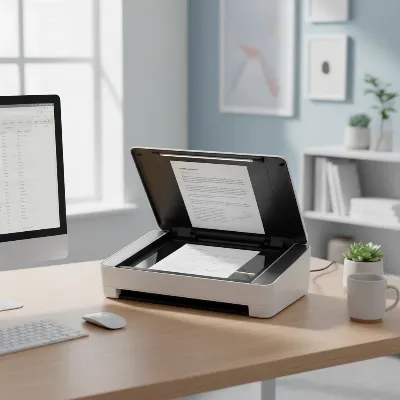 A flatbed scanner with a document placed on its glass surface, ready for scanning to PDF.
 -
Sheet-Fed (ADF) Scanners: Designed for speed and efficiency, sheet-fed scanners use an Automatic Document Feeder (ADF) to process multiple pages consecutively. They are perfect for high-volume tasks like digitizing invoices or reports, with many models supporting duplex scanning for both sides in a single pass.
-
Portable Scanners: Compact and lightweight, portable scanners are built for scanning on the go. Often battery-operated or USB-powered, they are convenient for business travelers or field agents needing to digitize receipts or notes away from an office. They typically have lower resolutions than larger desktop models.
-
Desktop Scanners: This broad category includes scanners for typical home or office use, often combining flatbed and ADF functionalities. They are general-purpose devices capable of handling moderate daily scanning tasks and often come with software for managing and converting documents to PDF.
-
Specialty Scanners: Beyond common types, specialized scanners cater to niche requirements:
- Production Scanners are high-volume, high-speed devices for industrial-scale scanning, processing thousands of pages per hour.
- Photo Scanners are engineered for superior color accuracy and high resolution, specifically for preserving photographs and delicate artwork.
- Large Format Scanners are essential for digitizing oversized materials such as blueprints, maps, and architectural drawings, often scanning beyond A3 sizes.
|
Our Picks for the Best Document Scanner in 2026
As an Amazon Associate I earn from qualifying purchases.
|
||
| Num | Product | Action |
|---|---|---|
| 1 | ScanSnap iX1300 Compact Wireless or USB Double-Sided Color Document, Photo & Receipt Scanner with Auto Document Feeder and Manual Feeder for Mac or PC, Black |

|
| 2 | Epson WorkForce ES-50 Portable Sheet-Fed Document Scanner for PC and Mac |
|
| 3 | Canon imageFORMULA R10 - Portable Document Scanner, USB Powered, Duplex Scanning, Document Feeder, Easy Setup, Convenient, Perfect for Mobile Users |
|
| 4 | ScanSnap iX1300 Compact Wireless or USB Double-Sided Color Document, Photo & Receipt Scanner with Auto Document Feeder and Manual Feeder for Mac or PC, White |
|
| 5 | Doxie Pro DX400 - Duplex Document Scanner and Receipt Scanner For Home and Office With Amazing Software for Mac and PC |
|
| 6 | ScanSnap iX2500 Wireless or USB High-Speed Cloud Enabled Document, Photo & Receipt Scanner with Large 5" Touchscreen and 100 Page Auto Document Feeder for Mac or PC, Black |
|
| 7 | Brother DS-640 Compact Mobile Document Scanner, (Model: DS640) 1.5"x2"x11.9" |
|
| 8 | ScanSnap iX2500 Wireless or USB High-Speed Cloud Enabled Document, Photo & Receipt Scanner with Large 5" Touchscreen and 100 Page Auto Document Feeder for Mac or PC, White |
|
| 9 | Epson Workforce ES-C220 Compact Desktop Document Scanner with 2-Sided Scanning and Auto Feeder (ADF) for PC as Well as Mac |
|
| 10 | Canon imageFORMULA R40 Office Document Scanner Receipt Edition, for PC and Mac, Scan & Extract Data to QuickBooks Online, Color Duplex Scanning, Auto Document Feeder, Easy Setup for Office Or Home Use |
|
Comparison of Document Scanner Types
Choosing the best scanner involves weighing several factors, including speed, resolution, and capacity, against your specific operational needs.
| Feature | Flatbed Scanner | Sheet-Fed (ADF) Scanner | Portable Scanner |
|---|---|---|---|
| Speed | Slower, manual page placement | Very fast, automatic multi-page feeding | Moderate, manual or small sheet-fed |
| Resolution | High, excellent for detail | High to moderate, optimized for text | Moderate to low, suitable for basic documents |
| Document Size | Versatile (books, fragile, irregular items) | Standard paper sizes (A4, Legal), loose documents only | Small documents (receipts, cards, letters) |
| Special Features | Good for delicate items, bound materials | Duplex scanning, batch processing, often with OCR | Lightweight, battery-powered, cloud connectivity |
| Best Use Case | Artwork, photos, books, IDs, single-page documents | High-volume document processing, multi-page reports | Mobile professionals, field work, personal travel |
| Price Range | Mid to high | Mid to high | Low to mid |
How to Choose a Document Scanner
Selecting the right document scanner is crucial for optimizing your workflow and achieving high-quality digital outputs. Consider these factors to ensure your investment aligns with your needs:
-
Identify Your Needs:
- Volume: For occasional use, a basic flatbed or mobile app might suffice. For high volumes, an ADF scanner is indispensable.
- Document Type: This dictates whether you need a flatbed, photo, or large-format scanner for standard paper, fragile photos, bound books, or blueprints.
- Quality: High resolution (DPI) and color accuracy are paramount for artwork, while clear text is sufficient for archiving.
-
Key Factors to Consider:
- Scanning Speed: Measured in pages per minute (PPM), faster speeds are critical for high-volume operations. Duplex scanning also significantly boosts speed.
- Resolution (DPI): Higher DPI means greater detail. 200-300 DPI is adequate for general text, while photos may require 600 DPI or higher.
- Paper Size and Handling: Ensure the scanner supports your regular document sizes. ADF capacity for multiple pages is key for productivity.
- Connectivity: Modern scanners offer USB, Ethernet, Wi-Fi, and cloud integration for flexible placement and access.
- Software Features: Look for bundled software with Optical Character Recognition (OCR) for searchable and editable PDFs, image enhancement, and easy file organization.
- Budget: Prioritize features that provide long-term value and efficiency within your determined budget.
> “A document scanner is more than just a tool for digitizing paper; it’s a gateway to streamlined workflows, enhanced accessibility, and robust information management in any setting.”
Top Document Scanners and Software Solutions Today
While specific model recommendations can change frequently, certain features and software consistently define top-tier scanning solutions across different categories.
- Versatile Desktop Scanners: Many leading brands offer all-in-one multifunction printers (MFPs) or dedicated desktop scanners that combine flatbed and ADF capabilities. These devices are excellent for varied scanning needs, featuring high-resolution output, fast duplex scanning, and robust software with OCR. They often integrate seamlessly with document management systems and cloud services.
- Mobile Scanning Apps: For ultimate convenience, mobile applications like Adobe Scan and Google Drive’s built-in scanner transform smartphones into powerful portable scanners. These apps leverage AI to correct image perspective, sharpen text, remove shadows, and automatically detect document boundaries. Crucially, they offer OCR to make scanned text editable and searchable, and they allow direct saving to PDF and cloud storage.
- Specialized Software: Beyond basic scanner utilities, advanced PDF software like WinZip PDF Pro offers enhanced capabilities for managing scanned documents. Such tools can merge multiple scans into a single PDF, convert various file types, add security features like password protection, and facilitate sharing.
Tips for Using and Maintaining Your Document Scanner
To maximize the lifespan of your scanner and ensure consistently high-quality PDF outputs, adopting best practices for use and maintenance is essential.
Efficient Scanning Techniques
- Prepare Documents Thoroughly: Always remove staples, paper clips, and sticky notes before scanning. Fan the edges of stacked documents to prevent static cling and double feeds. Smooth out wrinkles or creases for a clear scan. For smaller items, tape them gently onto a larger sheet of paper.
- Optimize Resolution Settings: Adjust DPI according to content. 200-300 DPI is sufficient for standard text, balancing clarity and file size. For photos or intricate details, use 600 DPI or higher.
- Utilize Automatic Document Feeder (ADF): For multi-page documents, use the ADF for quick scanning. Most ADFs support duplex scanning, capturing both sides simultaneously. Ensure documents are correctly aligned to prevent skewed scans.
- Leverage OCR: Always use Optical Character Recognition (OCR) software if available. OCR converts scanned images into searchable and editable text, making your PDFs incredibly useful for information retrieval and digital archiving.
- Scan Directly to PDF or Cloud: Many modern scanners and mobile apps allow direct saving to PDF and immediate upload to cloud storage like Google Drive or Dropbox, streamlining digitization and improving accessibility.
Scanner Maintenance to Extend Lifespan
- Regular Cleaning: Clean the scanner’s glass plate and rollers at least once a month (more with heavy use) using a soft, lint-free cloth and a non-abrasive cleaner. This prevents lines or blurry spots from dust and residue.
- Inspect for Damage: Periodically check for physical damage or wear on rollers and moving parts. Addressing minor issues early prevents larger problems.
- Software Updates: Keep your scanner’s drivers and software updated. Manufacturers often release updates that improve performance, add features, or fix bugs.
- Handle with Care: Load documents gently into the ADF and avoid forcing pages. Rough handling can damage internal mechanisms.
Following these tips will not only enhance the quality and speed of your PDF scans but also extend the life of your valuable equipment, ensuring a consistent and reliable document management solution.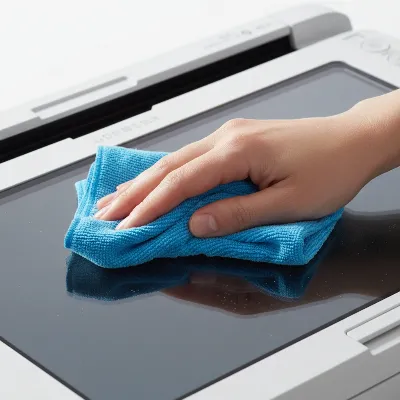 A hand wiping the glass of a document scanner with a microfibre cloth, emphasizing proper maintenance for PDF scanning quality.
Conclusion
Digitizing your documents into PDF format is a powerful step towards a more organized, efficient, and secure workspace. Whether you opt for the convenience of a mobile app, the versatility of a desktop scanner, or the power of a high-volume sheet-fed machine, the key lies in understanding your specific needs and leveraging the right tools and techniques. By applying smart preparation, optimizing settings, and maintaining your equipment, you can consistently produce high-quality, searchable, and easily manageable PDF files. Embrace these strategies to transform your paper-based processes into a seamless digital workflow, saving time, space, and effort in the long run.
What steps will you take today to begin your journey toward a paperless and more productive environment?
Frequently Asked Questions
What is OCR and why is it important for scanning documents to PDF?
OCR, or Optical Character Recognition, is a technology that converts images of text into machine-readable text data. When scanning documents to PDF, OCR allows the text within the scanned image to become searchable and editable, making your digital documents much more functional and easier to manage than simple image-based PDFs.
Can I scan multiple pages into a single PDF file?
Yes, most modern scanners and scanning software, including many mobile apps and desktop applications, allow you to combine multiple scanned pages into one single PDF document. For physical scanners, this is often facilitated by an Automatic Document Feeder (ADF).
What resolution (DPI) should I use when scanning documents to PDF?
For standard text documents where readability is key, a resolution of 200-300 DPI (dots per inch) is generally recommended. If you are scanning photos or documents with fine print, intricate graphics, or for archival purposes, a higher resolution of 600 DPI or more might be necessary to capture all details accurately.
Is it possible to scan documents to PDF without a dedicated scanner?
Absolutely. Many smartphone applications, such as Adobe Scan and Google Drive’s built-in scanner, can transform your phone’s camera into a portable document scanner. These apps often include features like automatic edge detection, image enhancement, and direct saving to PDF format.
How can I make sure my scanned PDFs are secure?
To secure your scanned PDFs, use software that offers password protection, encryption, or digital signature capabilities. Many advanced PDF editing suites allow you to apply these security measures, ensuring that sensitive information remains confidential and that documents cannot be tampered with without authorization.
Frequently Asked Questions
What is OCR and why is it important for scanning documents to PDF?
OCR, or Optical Character Recognition, converts images of text into machine-readable data. This technology is important because it makes the text within scanned PDFs searchable and editable, significantly enhancing document functionality and management compared to basic image-based PDFs.
Can I scan multiple pages into a single PDF file?
Yes, most modern scanners and scanning software, including many mobile apps, allow you to combine multiple scanned pages into one PDF document. For physical scanners, an Automatic Document Feeder (ADF) often facilitates this process, streamlining multi-page document digitization.
What resolution (DPI) should I use when scanning documents to PDF?
For standard text documents, a resolution of 200-300 DPI (dots per inch) is generally recommended for optimal readability and manageable file size. For photos, intricate graphics, or archival purposes, a higher resolution of 600 DPI or more might be necessary to capture fine details accurately.
Is it possible to scan documents to PDF without a dedicated scanner?
Absolutely. Smartphone applications like Adobe Scan and Google Drive's built-in scanner can transform your phone's camera into a portable document scanner. These apps often include features such as automatic edge detection, image enhancement, and direct saving to PDF format, making them highly convenient.
How can I make sure my scanned PDFs are secure?
To secure your scanned PDFs, utilize software that offers password protection, encryption, or digital signature capabilities. Many advanced PDF editing suites allow you to apply these security measures, ensuring sensitive information remains confidential and preventing unauthorized tampering.
How to Choose a Document Scanner
Selecting the right document scanner is crucial for optimizing your workflow and achieving high-quality digital outputs. Consider these factors to ensure your investment aligns with your needs.
Determine your daily, weekly, or monthly scanning volume. For high volumes, an ADF scanner is indispensable, while occasional use might only require a basic flatbed or mobile app. Also, consider the types of documents you'll scan, such as standard paper, fragile photos, or large blueprints, to choose between flatbed, photo, or large-format scanners.
Prioritize scanning speed, measured in pages per minute (PPM), for high-volume operations; duplex scanning significantly boosts this. For resolution, 200-300 DPI is adequate for general text, but 600 DPI or higher is needed for photos or documents with fine details to ensure clarity and detail capture.
Ensure the scanner supports the sizes of documents you regularly scan, and assess the Automatic Document Feeder's (ADF) capacity for multi-page productivity. Modern scanners offer various connectivity options like USB, Ethernet, Wi-Fi, and cloud integration, providing flexible placement and access.
Look for bundled software that includes Optical Character Recognition (OCR) to create searchable and editable PDFs, along with image enhancement tools and easy file organization. Finally, determine your budget, prioritizing features that will provide long-term value and efficiency for your specific scanning requirements.

I finally bit the bullet and got a dedicated document scanner after years of struggling with my all-in-one printer. The difference is night and day! I can batch scan so many pages into a single PDF, and the quality is fantastic. It’s made such a huge impact on decluttering my home office and getting all my old tax documents digitized.
I tried one of the budget-friendly portable scanners mentioned, and while it’s super convenient for travel, the scanning speed isn’t as fast as I’d hoped. It works fine for a few pages here and there, but if you have a big stack, it can feel a bit slow. The PDF output is good though, so it’s not all bad.
My old flatbed scanner was just too slow for the volume of documents I needed to digitize for my small business. Switching to a high-speed scanner has been incredible. The ability to scan double-sided documents automatically into a single PDF file has saved me so much time and effort. My filing system is finally organized!
I’ve been using a mobile scanning app for a while, and it’s decent for quick receipts, but I needed something more robust for work. The guide’s mention of sheet-fed scanners really resonated with me. I ended up getting one, and it’s been a game-changer for converting multi-page contracts into secure PDFs. Definitely worth the investment for professional use.